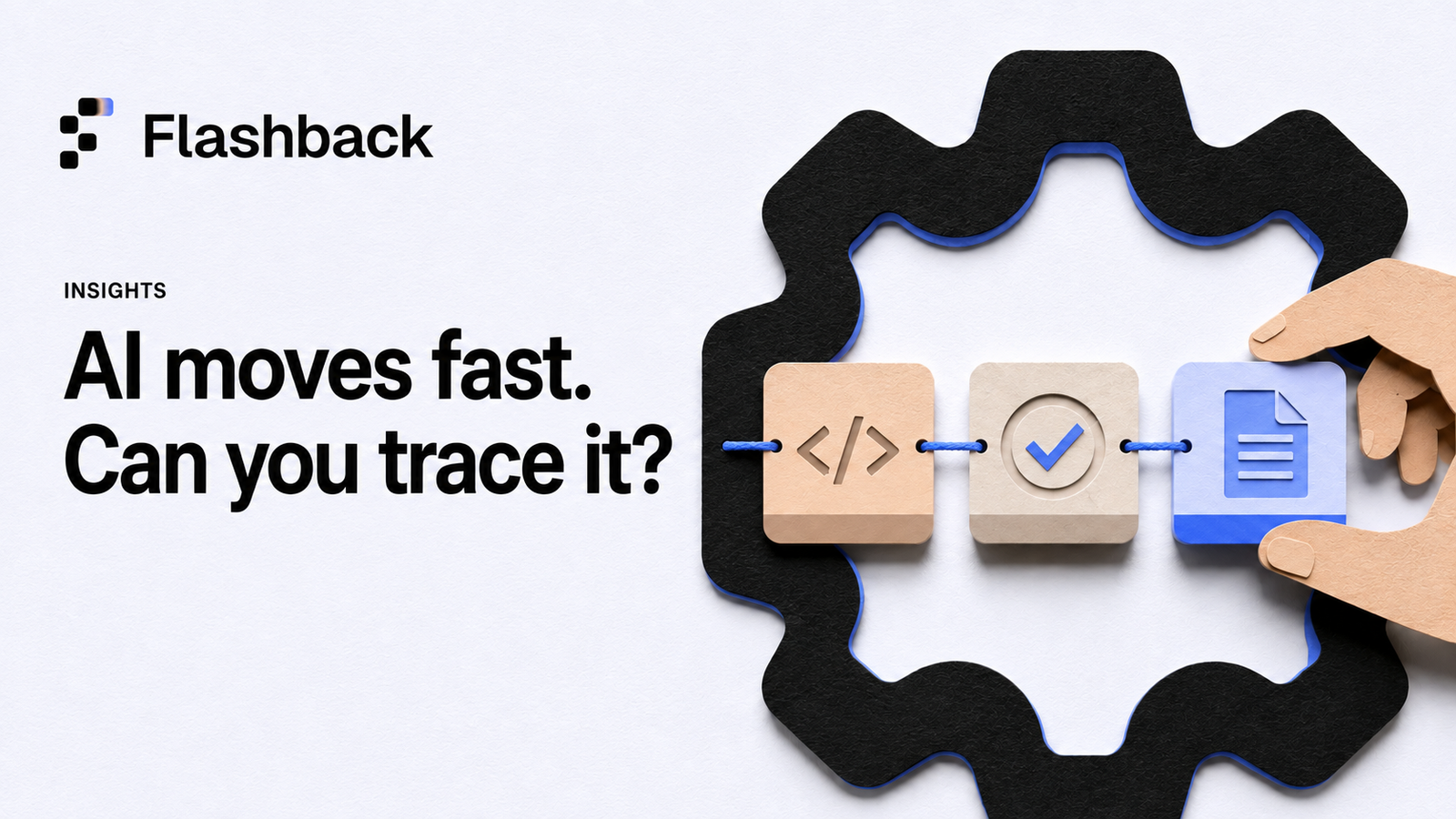
Before · Human-operated
People operate the workflow directly.
They retrieve context across software, make decisions, record the next step in a ticket, spreadsheet, or script, and hand work to the next person.
Learn more
Flashback helps companies redesign fragmented workflows into agent-operated, human-supervised systems — starting with one bounded workflow and building reusable infrastructure that can support the next.


Turn AI agents into operating leverage.
Flashback helps companies increase output, reduce operational costs, and transform fragmented digital workflows into agent-assisted systems that operate with human oversight.
Agentic Transformation
Flashback is an Agentic Transformation Company. The next wave of AI is not another interface added beside existing software. It changes how work itself is monitored, decided, coordinated, and executed.
Operating model
Before · Human-operated
They retrieve context across software, make decisions, record the next step in a ticket, spreadsheet, or script, and hand work to the next person.
After · Agent-operated, human-supervised
Flashback redesigns enterprise workflows so AI agents can gather permitted context, use existing tools and systems, and recommend or execute bounded actions. People retain control over policy, material decisions, approvals, and exceptions.
The Flashback Method
Agentic Transformation is not simply a model deployment. Flashback maps how work operates, redesigns it around agents and human control, integrates the system into the environment already in place, and then operates and improves it in production.
Identity · Permissions · Policy · Approval · Evidence
Map the workflow, systems, context, decisions, metrics, permissions, risks, and handoffs. Preserve human judgment and identify work suited to agent operation.
Process · Systems · Decisions · Risk
Engineer agents, context layers, orchestration, and interfaces around the tools, APIs, cloud systems, enterprise software, and data already in place.
Agents · Context · Tools · APIs
Architect identity, permissions, action boundaries, approvals, policy, cost controls, audit evidence, escalation, and exception handling into the system.
Identity · Permissions · Approval · Audit
Deploy the workflow, monitor behavior and exceptions, tune reliability and cost, measure performance, and expand permitted actions deliberately.
Monitor · Exceptions · Tune · Measure
Services
One transformation method, applied to the operating environments where agents can create measurable leverage. Flashback combines process redesign, engineering, integration, governance, and production operations across cloud infrastructure, AI operations, and agent-native software workflows.
Redesign cloud operations, migrations, governance, and cost optimization around agent-assisted workflows and controlled execution.
Govern and optimize model selection, budgets, usage, and token efficiency as AI becomes part of production operations.
Design products, integrations, and operational workflows so agents can use existing systems and act within explicit human supervision.
Why Flashback
Agentic Transformation requires tight loops between process redesign, engineering, governance, and production operations. Flashback combines direct senior involvement, an agent-first delivery model, reusable technology, and explicit operational controls without forcing every engagement into one model, vendor, or monolithic platform.
The difference is how the delivery system works.
Our own delivery model uses agents and reusable technology alongside senior builders. That means tighter technical loops, less repetitive delivery work, and implementation patterns that compound across engagements.
Senior builders · Agent-assisted execution · Reusable patterns
We design agents around how the organization actually operates—its processes, roles, systems, policies, data, and decision rules—then embed them directly into the workflow.
Process context · Existing systems · Real workflows
The architecture follows the workflow, risk, data, performance, and cost requirements—not a predetermined model, cloud, or agent ecosystem.
Model flexibility · Cloud flexibility · Integration-first
Identity, permissions, bounded actions, human approvals, evidence, and auditability are designed into the operating model from the start—not added after deployment.
Explicit permissions · Human approval · Traceable actions
Reusable enterprise agent harness
ClowdOps provides shared control and execution infrastructure for selected agentic transformations. Start with one bounded workflow, establish the governed harness, then reuse that foundation as additional specialized agents and operational domains are introduced.
Start with one bounded workflow. ClowdOps provides reusable identity, credentials, permitted context, tools, policies, approvals, observability and recovery so additional specialized agents can be deployed without rebuilding the underlying control and execution stack.
Learn more








Network
Flashback brings together senior client delivery and technical partners to help companies transform operations across cloud, AI, software, and business workflows.
Insights
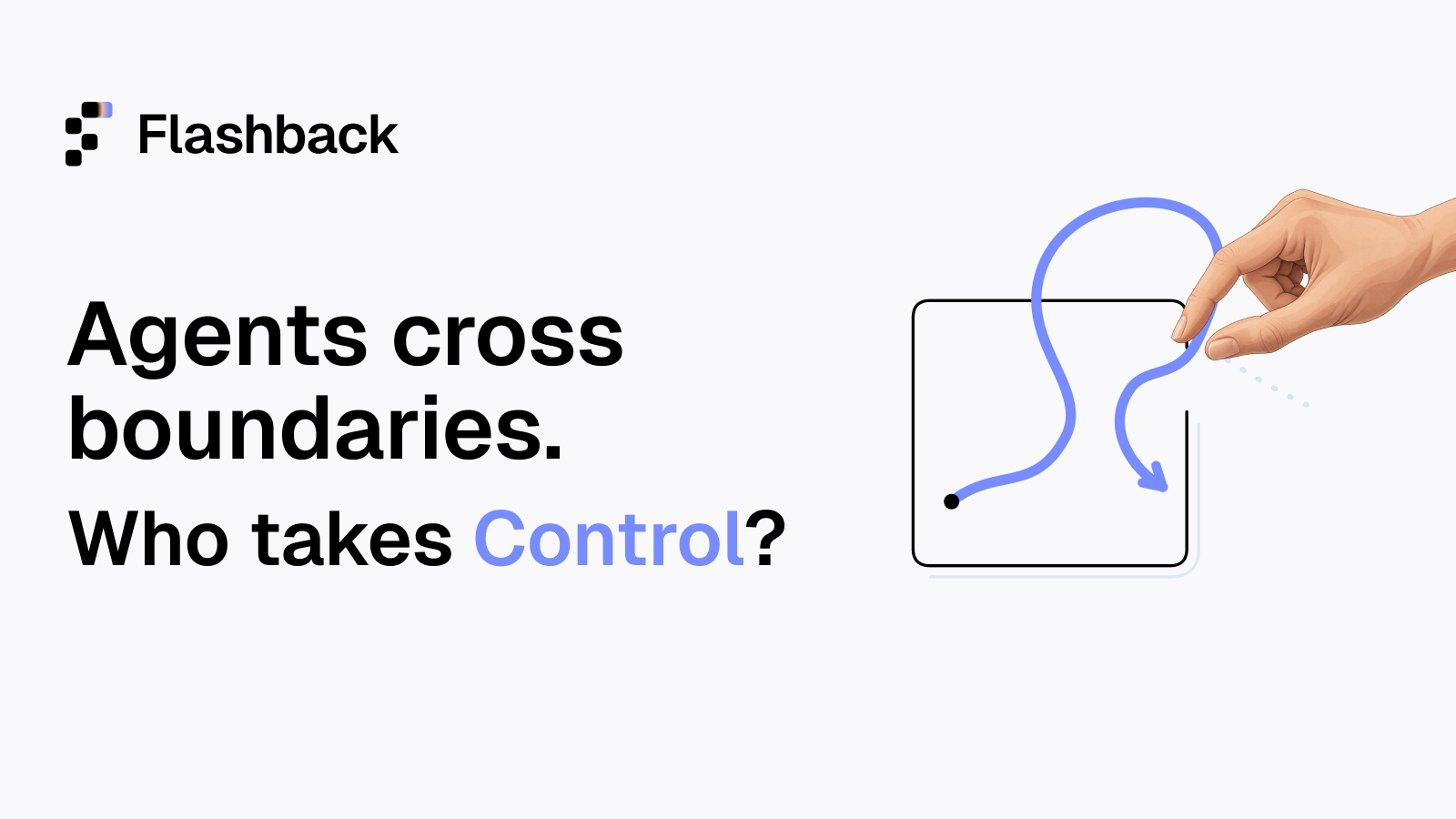
When an AI agent exceeds its mandate, human authority needs an operating path: bounded permissions, a real intervention mechanism and controlled recovery.
Start with a bounded operational workflow where agents can create leverage while human control remains explicit.